Common South Carolina DUI Questions: What Drivers Need to Know in 2025
If you’re pulled over, arrested, or even worried about a DUI in South Carolina, you’re not alone – and you’re not the first person to Google the exact questions below. South Carolina’s DUI laws are strict, technical, and full of details that most people don’t learn until it’s too late.
This guide breaks down the most common DUI questions we hear at Mastantuno Law Firm, answered in clear, practical language so you know what to expect – and how to protect yourself.
South Carolina DUI FAQ’s
Can You Get a DUI for Prescription or Over-the-Counter Medication?
Yes. Absolutely. In South Carolina, DUI doesn’t require alcohol – only that a substance “materially and appreciably impairs” your ability to drive (S.C. Code §56-5-2930).
That means you can be charged with DUI if you’re impaired by:
When you’re hurt because of someone else’s negligence, the medical bills and lost wages are only part of the story. The real impact often shows up in the pain you live with, the anxiety that hits you at night, or the hobbies and relationships your injuries now limit.
This is why pain and suffering compensation exists – to compensate victims for the non-economic harm an injury causes. In South Carolina, these damages can be substantial, but the rules behind them are more complex than most people realize.
Below is a clear, SC-specific guide to how pain and suffering works, how it’s calculated, and what your claim may be worth.
Hurt in a South Carolina Accident? We’re Here to Help
Contact Form
What Counts as Pain and Suffering in South Carolina?
Pain and suffering includes the physical and emotional impact your injury has on your daily life. Under South Carolina law, this generally includes:
Physical Pain
Ongoing pain from injuries
Long-term or permanent discomfort
Complications from surgeries or treatment
Loss of mobility or chronic conditions
Emotional & Mental Suffering
Anxiety
Depression
Insomnia
Trauma or PTSD after an accident
Loss of enjoyment of life
Lifestyle Impacts
These are huge factors in valuation:
Can’t work normally
Can’t lift kids, play sports, exercise
Strain on relationships
Inability to enjoy hobbies or social activities
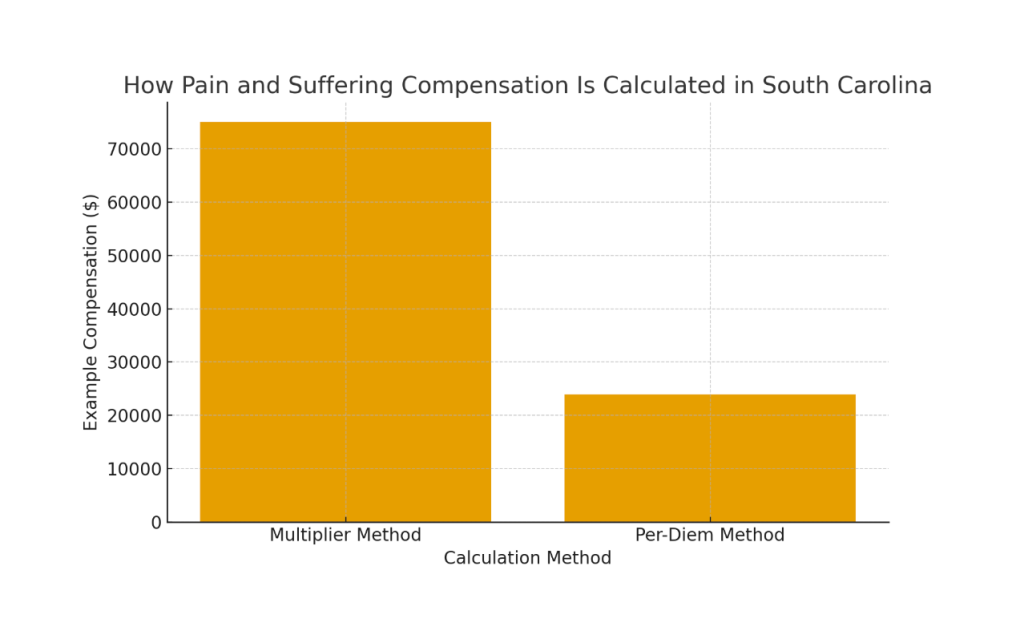
How Is Pain and Suffering Compensation Calculated in South Carolina?
There’s no universal formula, but South Carolina adjusters, attorneys, and courts typically use two main methods:
1. The Multiplier Method
Your economic damages (medical bills, lost wages) are multiplied by a number between 1.5–5+, depending on:
Severity of injuries
Permanency
Required medical treatment
Level of life disruption
Fault and liability clarity
Example: $25,000 in medical bills × 3 multiplier = $75,000 pain and suffering compensation
2. The Per-Diem Method
A daily dollar amount is assigned for every day you suffered until you reached maximum medical improvement (MMI).
Example: $200/day × 120 recovery days = $24,000 total
Important SC-Specific Factors
South Carolina factors that influence your pain and suffering value:
Comparative Negligence: If you’re found partially at fault (ex: 10%), your total compensation is reduced.
Your personal injury lawyer’s ability to document and argue these damages significantly impacts your case.
Car Accident Pain and Suffering Compensation
For South Carolina car accidents, pain and suffering depends on:
Impact severity
Medical documentation
Permanency of injuries
Whether you sought treatment right away
Whether injuries limited your ability to work
Insurance companies pay the least when:
You waited days to get medical care
You stopped treatment early
You only saw a chiropractor with no imaging
They pay the most when:
You have imaging (MRI, CT, X-rays)
You see specialists
You follow a treatment plan
Your attorney builds a strong narrative
Workers’ Comp Pain and Suffering: Can You Get It in South Carolina?
This is where many people get confused.
South Carolina does NOT allow pain and suffering compensation in standard workers’ comp claims.
BUT — you may recover pain and suffering if:
A third party caused your injuries (ex: subcontractor, driver, manufacturer)
There is a product liability claim
Your employer intentionally harmed you (rare)
These third-party cases dramatically increase compensation beyond the workers’ comp system.
Do Pain and Suffering Calculators Work?
Online calculators only estimate very broad ranges. They can’t account for:
Permanent impairment
Liability disputes
Insurance company tactics
Medical credibility
SC-specific comparative negligence laws
A real calculation requires medical review + an experienced personal injury lawyer.
Frequently Asked Questions (SEO-Optimized Q&A)
1. What is pain and suffering compensation?
Money awarded for the physical pain and emotional harm caused by an injury.
2. How much compensation can I get for pain and suffering?
Settlements in SC typically range from $5,000 to several hundred thousand dollars depending on severity, treatment, and permanency.
3. How is pain and suffering calculated in personal injury cases?
Through the multiplier or per-diem method. The multiplier (1.5–5+) is most common in South Carolina.
4. What affects the amount of pain and suffering compensation?
Medical treatment, imaging, long-term pain, permanent impairment, daily life limitations, and whether you were partly at fault.
5. Do I need a personal injury lawyer to get pain and suffering?
Technically no — but insurance companies almost never pay fair pain and suffering without a lawyer, especially in SC.
6. Can veterans receive additional pain and suffering compensation?
Yes. Veterans injured in civilian accidents have the same rights to compensation as anyone else, and their military background is often helpful in proving lifestyle impact.
7. Can I get pain and suffering in a workers’ compensation claim?
Not through workers’ comp — only through a third-party personal injury claim.
When to Call a South Carolina Personal Injury Lawyer
You should contact an attorney when:
You’re in pain longer than expected
Your doctor mentions long-term effects
Your injury affects your job, family, or hobbies
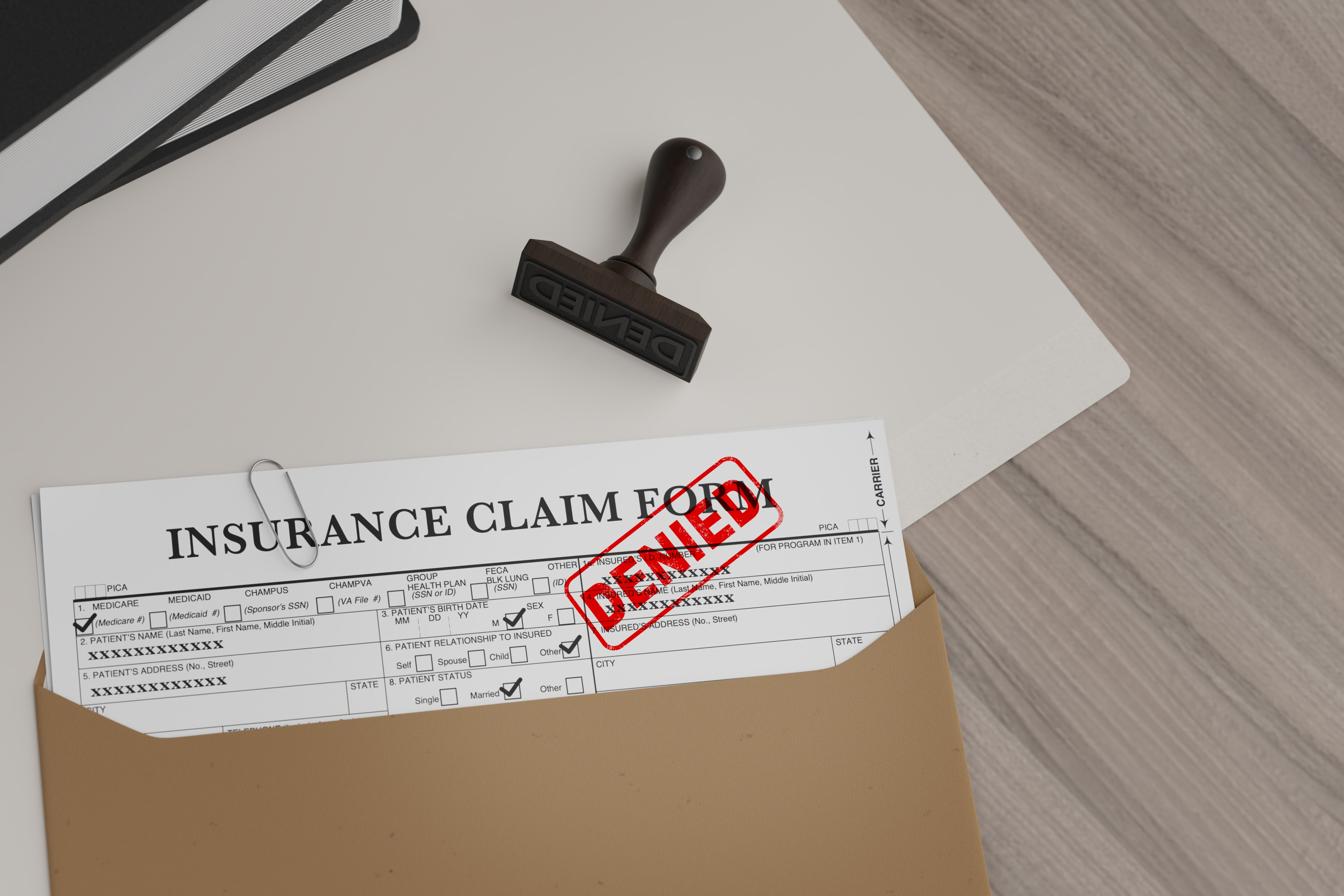
The insurance company lowballs or denies you
You have questions about your rights
Pain and suffering is often the largest part of a settlement, and without legal help, that category is the first thing insurers try to minimize.
Mastantuno Law Firm helps injured South Carolinians build strong cases that capture the full value of their physical and emotional losses.
J Allen Mastantuno Charleston Personal Injury Attorney
Being convicted of a DUI is not just about paying a fine or serving a short time in jail. For many people, the real damage happens behind the scenes – in higher insurance premiums, lost employment opportunities, licensing issues, and more. Here’s a breakdown of what you really face if you are convicted of driving under the influence in South Carolina (or elsewhere) – and why having strong legal representation matters.
1. Immediate Financial Penalties following a DUI in South Carolina
In South Carolina, the financial impact of a DUI conviction extends far beyond the initial ticket. While many people think of a DUI as a one-time fine, the truth is that each conviction comes with mandatory assessments, surcharges, license suspensions, and often jail time – all of which compound quickly.
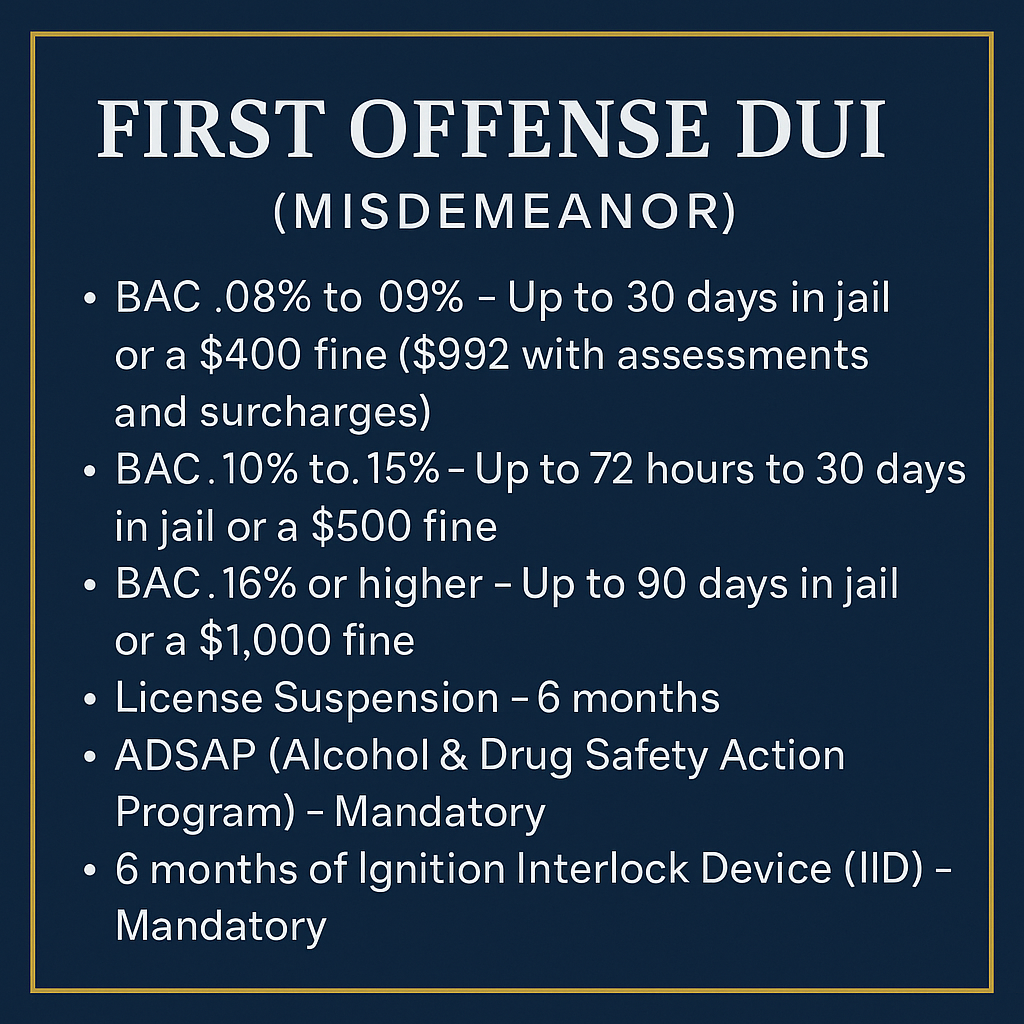
For a first-offense DUI, you face a fine of up to $400, which increases to approximately $992 once the state adds required court assessments and surcharges. The court may also impose 48 hours to 30 days in jail and a six-month license suspension.
A second DUI offense carries fines ranging from $2,100 to $5,100 (or roughly $10,744.50 with surcharges), plus five days to one year in jail and a one-year license suspension.
A third offense DUIin SC increases the fine to $3,800–$6,300 (or about $13,234.50 with surcharges) and includes 60 days to three years in jail. Your driver’s license will be suspended for at least two years, and longer if the offenses occur within a five- or ten-year window.
For a fourth DUI or subsequent offense, penalties rise dramatically – one to five years in prison and permanent revocation of your driver’s license.
Felony DUI Charges – Results in Great Bodily Injury or Death
If the DUI results in great bodily injury or death, the charge becomes a felony DUI with mandatory fines ranging from $5,100 to $25,100 (totaling up to $52,244.50 with surcharges) and 30 days to 25 years in prison, depending on the severity of the outcome.
In addition to these fines and penalties, offenders typically face the cost of towing and impoundment, bail, mandatory alcohol education or treatment programs, and license reinstatement fees, all of which can push the total financial impact of a DUI conviction well into the tens of thousands of dollars.
2. Insurance Rate Increases & High-Risk Driver Status
One of the most costly long-term consequences of a DUI conviction in South Carolina is the impact it has on your auto insurance. While a first-time DUI may cost several hundred dollars in fines, the financial hit from higher premiums can last for years, often far exceeding the original penalty.
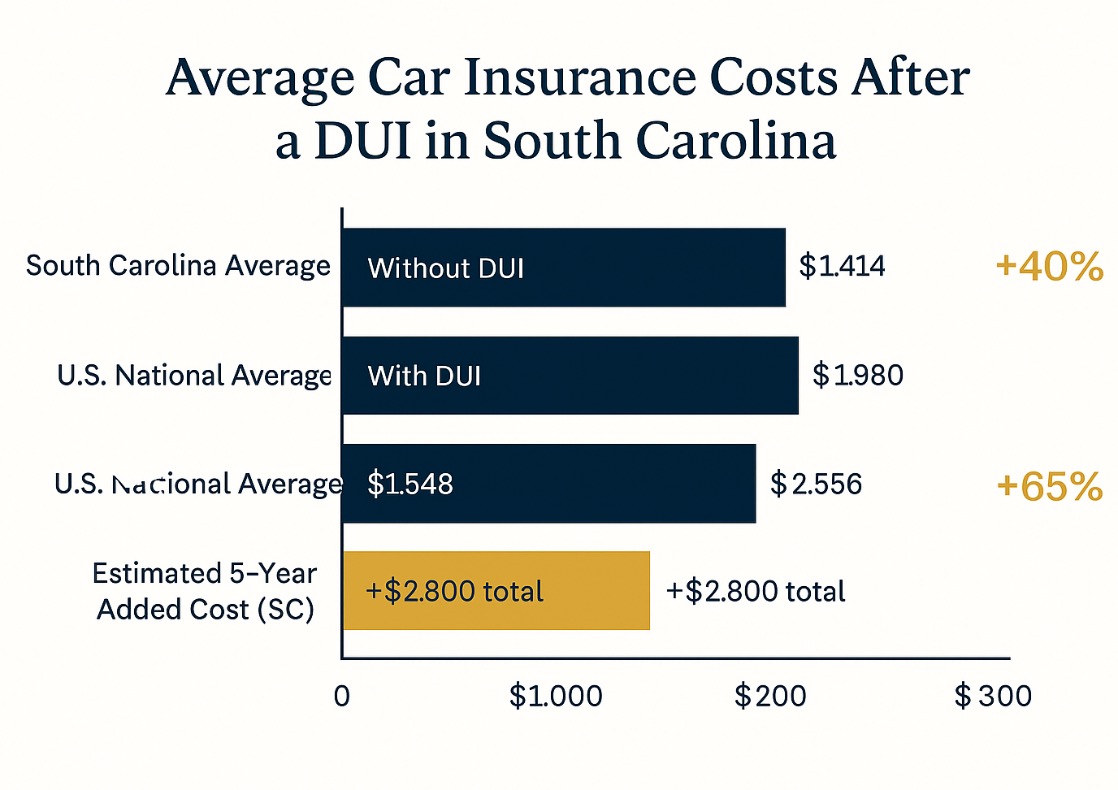
Average Car Insurance Costs After a DUI in South Carolina
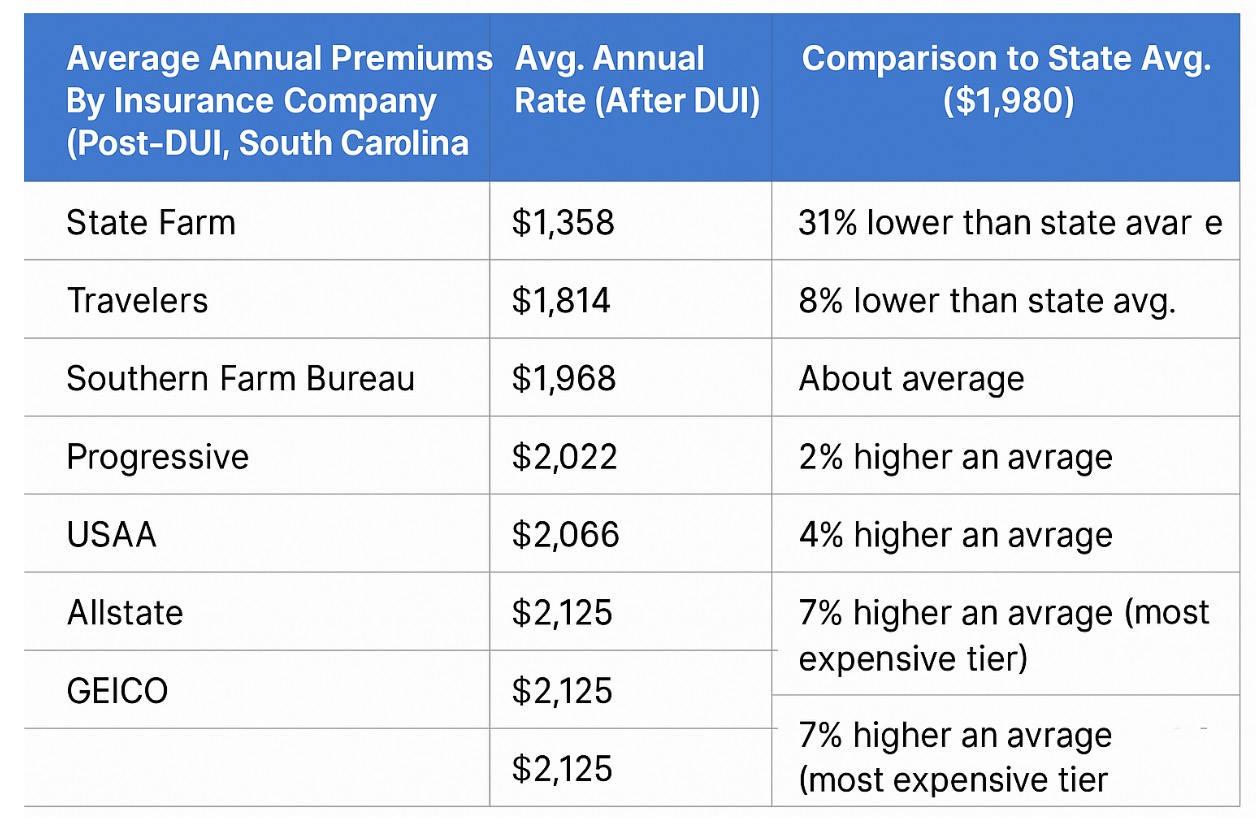
In South Carolina, a DUI conviction raises the average annual cost of car insurance by roughly 40%, increasing premiums from about $1,414 to $1,980 per year. That’s a smaller percentage increase than the national average of 65%, but it’s still a major long-term financial burden. Over just five years, that rate difference can add more than $2,800 in extra insurance costs alone.
Following a DUI, most insurance companies classify you as a high-risk driver, which automatically limits your options and triggers steep rate adjustments. According to recent state data, State Farm tends to offer the most affordable post-DUI rates in South Carolina – averaging around $1,358 per year – while GEICO ranks among the most expensive, averaging $2,125 per year. Other insurers, including Travelers, Progressive, and USAA, fall somewhere in between.
Securing new coverage after a DUI can also be difficult. Some carriers may refuse to renew your policy altogether, while others may require you to file an SR-22 certificate – a document proving you carry the state’s minimum required liability insurance. Filing an SR-22 can raise premiums further and remain on your record for up to three years.
Average Annual Insurance Premium After a DUI in South Carolina
Ultimately, the best way to minimize long-term costs after a DUI is to compare rates across multiple insurers, maintain a clean record going forward, and consult an attorney early in the process. In many cases, timely legal action can help reduce charges or penalties – which can make a measurable difference in how insurers assess your future risk.
License Suspension Reinstatement and Monitoring Devices after a DUI in South Carolina
After a DUI conviction in South Carolina, your driver’s license will be suspended or revoked for a prescribed period, and reinstating it requires more than simply paying fees. For many drivers, the path back to legal driving includes mandatory programs, device installations, and strict compliance requirements.
Under the new law effective May 19, 2024, anyone convicted of Driving Under the Influence (DUI) or Driving with an Unlawful Alcohol Concentration (DUAC) must install a breath alcohol ignition interlock device (BAIID/IID).
The period for which the IID must remain installed depends on how many prior offenses you have and other factors.
Completing the Alcohol and Drug Safety Action Program (ADSAP) and submitting proof of completion.
Paying the standard reinstatement fee of $100 for a DUI-related suspension, plus any other unpaid fees or fines.SCDMV Online
If you owe substantial reinstatement fees, the South Carolina Department of Motor Vehicles (SCDMV) offers a 12-month payment plan under certain eligibility conditions.SCDMV Online
Failing to comply with any of these requirements – including skipping the interlock installation – will prolong your suspension or prevent reinstatement altogether.SCDPPPS – Ignition Interlock
4. Employment, Career, and Licensing Consequences Following a DUI
Employment Career and Licensing Consequences Following a DUI in South Carolina
A DUI conviction can have serious implications beyond the courtroom – especially for professionals whose careers depend on trust, licensure, or clean background checks.
In South Carolina, licensing boards for fields such as healthcare, education, law, real estate, and commercial driving may open investigations after a DUI conviction. The outcome often depends on factors like whether anyone was injured, your prior record, and whether the offense occurred on the job. First-time offenders who report the conviction promptly and complete any required programs often avoid license suspension or formal discipline.
Certain careers face stricter standards, including:
Commercial drivers (CDL holders) – risk of immediate license suspension and loss of employment
Pilots and aviation personnel – subject to FAA reporting requirements and potential airline termination
Law enforcement officers – may face internal investigations, suspension, or dismissal
Healthcare professionals – doctors, nurses, and pharmacists can face board review or disciplinary action
For others, the long-term damage often comes through:
Failed or flagged background checks during hiring
Employment restrictions in positions involving public safety or government work
Lost advancement opportunities or reduced employability in competitive fields
If you hold a professional license or work in a regulated field, consulting an experienced DUI attorney early can help protect your credentials, ensure compliance with reporting rules, and minimize the career fallout from a conviction.
Beyond the dollars, there are many costs that are harder to measure but very real.
Transportation costs if you lose your license and must rely on taxis, rideshare, public transit.
Emotional, mental and social consequences: stress, embarrassment, family strain, changed lifestyle.
Potential civil liability: if someone is injured due to the DUI, you may face restitution or lawsuit costs beyond the criminal penalties.
6. How to protect your rights and minimize long-term harm
Act quickly
After a DUI arrest, engaging a lawyer early can help preserve evidence, challenge procedures and reduce the risk of conviction or enhanced penalties.
Understand all the costs
Ask your attorney not just about the fine, but about insurance hikes, license monitoring devices, lost work, and other cascading impacts.
Be proactive with your insurance
Notify your agent, compare rates, explore whether high-risk driver programs apply, and budget for several years of higher premiums.
Plan for driving restrictions
If your license may be suspended or you face work-only or IID requirements, plan alternative transportation so your employment and daily life aren’t derailed.
Document everything
Keep records of fees paid, program attendance, vehicle inspections, insurance notifications, and any employment impact – this will help if you later negotiate insurance or job issues.
Maintain your professional reputation
If your career or licensing body may be impacted, speak with your attorney about disclosure requirements, mitigation options and how a DUI could affect your livelihood.
Conclusion
A DUI conviction is far more than a legal infraction – it can be a long-term drag on your finances, your career, your personal freedom, and your future. The true cost often emerges gradually, as insurance premiums soar, driving privileges disappear, jobs are jeopardized, and hidden fees pile up. At Mastantuno Law Firm in Charleston, we understand that protecting your rights means more than just fighting the charge – it means preserving your future. If you are facing DUI charges, act promptly, get informed, and choose representation that sees the full picture.
Being involved in an accident can be confusing, stressful and full of unknowns. What you do (or don’t do) in the minutes and hours after the incident can significantly affect your health, your insurance claims and your rights. Below are the key actions you should take right away – and why each matters.
Your first priority is always health and safety. If you or any passengers are injured, call 911 immediately. Even if everyone appears OK, it’s wise to have a medical professional check you out – injuries such as whiplash or internal trauma may not show symptoms right away.
If your vehicle is still drivable, move it (and yourself) to a safe location – out of the flow of traffic if possible, with hazard lights on. This reduces the risk of secondary collisions and demonstrates responsible action.
2. Notify law enforcement / get a police report
Having an official police or crash-report carries two important benefits: it adds credible third-party documentation of the incident, and it often triggers legal or insurance-process rights. Many jurisdictions require a report if there’s injury or significant damage.
At the scene, when interacting with the officer: provide factual answers, get the officer’s badge number, and after they leave, request a copy (or the report number) for yourself. Don’t speculate or admit fault.
3. Document the scene thoroughly
Before evidence disappears, document everything you can. This includes:
Photographs or video of all vehicles involved (from multiple angles).
Road conditions, traffic signs/signals, skid marks, weather or lighting conditions.
Visible injuries (yours and any others) and property damage.
Time, date and exact location of the accident.
Names & contact information of any witnesses. Collecting this evidence preserves the facts and will support insurance claims (and legal claims, if needed).
How to Document the Scene Correctly after a Car Accident
Address of the owner (if different from driver). This exchange helps your insurer and any future claimants track down liability and damages. At the same time, do not admit fault, apologize in a way that sounds like fault imposition, or provide a recorded statement on what happened. Stick to the facts (“here’s what I saw”) and let investigations determine liability.
5. Notify your insurance carrier and preserve your rights
Contact your own insurance company as soon as you are able – many policies require very prompt notification. Provide the basic facts (time, place, other driver info, injuries/damages) but again: avoid admitting fault. Be honest and consistent. Delays or misstatements can undermine your claim.
As noted above, some injuries become apparent only later (e.g., concussion, internal bleeding, soft-tissue damage). A prompt medical evaluation accomplishes two things: it protects your health and it creates a medical record linking the injuries to the accident. That record may be critical if you later seek compensation for medical bills, lost wages or pain and suffering.
Records of any lost income because you couldn’t work.
All communication with insurers or other parties. Maintaining a clear, organized file helps you demonstrate the full extent of your damages – and supports stronger settlement or litigation outcomes if needed.
8. Don’t ignore statutes of limitation or deadlines
Every state has deadlines for filing certain legal claims (statutes of limitation) and for reporting accidents to insurance companies or law enforcement. Failing to act within those timelines can permanently limit your rights. For example, in some jurisdictions you must file a report or claim within a relatively short window.
9. Consider legal advice if liability or injuries are significant
If you’ve suffered serious injuries, long-term impairments, or there’s a dispute over who was at fault, consulting an attorney early may protect your rights. While this is more obviously legal-advice territory, the key is this risk factor: once insurers or opposing parties begin investigations or negotiations, you’ll want someone experienced reviewing the facts, evidence and legal options. (Note: this step is about preserving rights, not automatically “you must hire a lawyer.”)
An accident can be overwhelming – but how you respond in the minutes, hours and days following the incident can make a significant difference in protecting your health, finances and legal rights. Prioritize safety, document everything, report what you must, avoid premature statements of fault, and keep detailed records. If your situation involves serious injuries or disputes, consulting someone experienced in accident-law and insurance is a wise next step.
When it comes to encounters with law enforcement on the road, DUI (driving under the influence) checkpoints — also called sobriety checkpoints or roadblocks — are among the most legally nuanced. For many drivers, they raise questions like: Do I have to stop?Can they search my car?What rights do I still hold? In this blog, we’ll walk through the legal framework, what to expect, and practical advice to protect your rights.
The Legal Landscape: Are DUI Checkpoints Even Legal?
U.S. Supreme Court Standard: Michigan Dept. of State Police v. Sitz
In Michigan Dept. of State Police v. Sitz (1990), the U.S. Supreme Court held that DUI checkpoints can be consistent with the Fourth Amendment (which guards against unreasonable searches and seizures). The Court balanced the government’s interest in preventing drunk driving against the intrusion on motorists.
However, that ruling does not give carte blanche to law enforcement. Checkpoints must follow procedural safeguards: they should be planned in advance, use neutral selection criteria (not arbitrary), be adequately publicized, and minimize the intrusion on drivers.
Limits on Purpose: City of Indianapolis v. Edmond
Another Supreme Court decision, City of Indianapolis v. Edmond (2000), draws a crucial boundary: roadblocks or checkpoints whose primary purpose is to uncover general criminal wrongdoing (e.g. drug searches) are unconstitutional. In contrast, checkpoints focused on seats for impaired driving, DUI enforcement, or highway safety are more likely to pass legal muster. Wikipedia
State-Level Variations
Even though the federal standard allows checkpoints under certain conditions, states may impose stricter limitations—or ban them entirely. For example:
Neutral Selection of Vehicles Officers stop cars according to a pre-set formula (e.g. every 3rd or 5th vehicle) rather than targeting specific types of drivers.
Brief Stop / Questioning Drivers who are stopped may be asked for ID, registration, insurance, and simple yes/no questions (e.g. “Have you been drinking tonight?”). The stop should be brief unless officers have additional suspicion.
Further Actions If Suspicion Arises If officers detect signs of impairment (smell of alcohol, bloodshot eyes, slurred speech, erratic driving), they may ask a driver to pull aside for further tests (field sobriety tests, breathalyzer).
Searches A routine checkpoint stop generally cannot justify a search of your vehicle unless officers develop probable cause, or you voluntarily consent. Warrantless searches without reasonable suspicion or cause can be challenged.
Duration of Detention The courts scrutinize how long you are held. A checkpoint stop must remain reasonable and not turn into a prolonged detention without justification.
You must comply with commands to stop, show your license, and obey lawful instructions.
If you are arrested, you still retain constitutional rights—right to remain silent, communicate with an attorney, and challenge the stop’s legality in court.
What To Keep in Mind
If the checkpoint is improperly conducted (e.g. stops are arbitrary, no advance public notice, no neutral selection, excessive delay), evidence from that stop may be suppressed.
Don’t lie to officers; false statements can create additional legal trouble.
Stay calm and respectful; don’t escalate the situation.
Pitfalls to Watch For & Common Misconceptions
“They can’t stop me unless they have probable cause.” Not always true. At checkpoints, you are subject to stop even without individualized suspicion, if the checkpoint is lawful. But anything beyond the brief stop must be justified.
“I have to submit to a breathalyzer right away.” Not necessarily. Implied consent laws vary by state; officers may ask for a chemical test, but the rules, penalties, and conditions differ.
“If they messed up the checkpoint, it invalidates the arrest.” It may—but suppression is not guaranteed. The court examines the seriousness of the violation, the prejudice to you, and whether it undermines the legitimacy of the checkpoint.
“This doesn’t apply in my state.” Always check your state’s laws. Even though 38 states permit checkpoints, 12 do not or limit them heavily.
Insist on your rights (remain silent, request an attorney).
Document everything you remember (time, location, officers’ names or badge numbers, what you were asked, any delays, etc.).
Contact a qualified DUI defense attorney who understands both federal and state checkpoint law.
Ask your attorney to examine whether the checkpoint was lawful and whether your rights were violated.
If you have been affected by a DUI Checkpoint in South Carolina, Contact Mastantuno Law Firm today. We can help.
In today’s hyperconnected world, many of us routinely post updates, photos, location check-ins, or comments about how we’re feeling. But if you’re pursuing a personal injury claim, your digital footprint can become a legal liability. Opposing counsel, insurance adjusters, and courts increasingly treat social media content as discoverable evidence. What seems like an innocuous post can become fodder to undermine your credibility, reduce your recovery, or even get your case dismissed.
Below, we explore the risks, real-world examples, legal groundwork, and best practices to protect your claim.
Why Social Media Matters in Personal Injury Litigation
1. Social Media = Evidence
Social media content (posts, photos, videos, check-ins, comments) is routinely used in personal injury cases as digital evidence. Courts often admit this evidence under the same rules as other evidence, provided it’s authenticated, relevant, and properly preserved.
Even private or “friends only” content can be compelled during discovery if deemed relevant by the court.
2. Contradiction & Credibility Attacks
One of the most common uses of social media by defense teams is to find contradictions:
A plaintiff claims debilitating back pain and inability to walk, but their Instagram shows them hiking or gardening.
Posts indicating travel, social events, or physical activity can cast doubt on claims of severe limitation or emotional distress.
Casual remarks like “feeling better” or “got through a good day” might be construed as admissions that symptoms have improved.
These contradictions are leveraged to argue that the plaintiff is exaggerating, malingering, or otherwise misrepresenting their condition.
3. Discovery Battles & Spoliation Risk
Because social media is so integral, legal teams often fight over access. Discovery requests (or subpoenas) may demand your full social media history, including message attachments, metadata, or deleted content.
Attempting to delete or alter posts once litigation is foreseeable can backfire severely. Courts may draw adverse inferences (i.e., assume the deleted content was unfavorable) or impose sanctions for spoliation.
4. Indirect Damage: Friends, Tags, Comments
It’s not just your own posts that matter:
Others’ posts or tags of you in seemingly innocuous settings can be introduced.
Comments threads, mentions, or engagement on posts can muddy the waters or supply new “evidence.”
Thus, you can be “caught” by someone else’s online commentary—even if you never intended it to be part of your case.
5. Settlement Leverage & Insurance Scrutiny
Even before trial, insurance adjusters and defense lawyers comb social media to weaken your claim. A social media post they regard as contradictory can become leverage to reduce settlement offers or force you to accept less.
In one cautionary example, a claimant’s hiking photos were used to challenge claimed injuries, reducing their compensation.
Example Cases Involving Social Media Evidence
1. Romano v. Steelcase Inc. (New York, 2010)
In Romano, the plaintiff claimed she suffered permanent injuries (neck/back) that limited her daily life and enjoyment of activities.
The defendant asked for access to her private Facebook and MySpace pages, including deleted content, arguing that her social media posts contradicted her claim of being homebound.
The court granted the motion, finding that social media content was relevant to questions of credibility and the extent of injury, and ordered her to provide authorizations for social media records.
Notably, the decision recognized that a user’s “reasonable expectation of privacy” over their social media is limited when the content is material and relevant to the litigation.
2. Forman v. Henkin (New York Court of Appeals, 2018)
This is a landmark New York case that set standards for how private social media posts may be discoverable. FORMAN v. HENKIN
Facts & Legal Holding:
Plaintiff, Kelly Forman, alleged severe injuries from falling off a horse (spinal, cognitive, communication limitations) that impaired her lifestyle.
Defendant moved to compel disclosure of her private Facebook material (photos, messages, metadata).
The Court of Appeals reversed parts of the lower court’s expansive order but held that private posts are not categorically off-limits just because they are private. The test: whether the materials are “reasonably calculated to contain relevant information” to the plaintiff’s claims.
The court emphasized the need to balance discovery utility and privacy concerns, and ordered that disclosure be tailored (only relevant portions).
Thus Forman clarified that “private” does not automatically mean “undiscoverable,” especially when the plaintiff puts lifestyle, cognitive capacity, or functional limitations at issue.
3. Other Cases & Situations (Less Famous, but Illustrative)
Scott v. U.S. Postal Service (cited in commentary) — a case in which a plaintiff’s social media posts showing physical activity were used to counter claims of disabling injury.
King v. Shabab (New York) — applying Forman, courts have awarded discovery sanctions or dismissal based on failure to produce social media evidence, when the plaintiff’s Instagram or online activity was relevant to claims.
To understand why social media content is fair game, here are a few legal principles:
Relevance & Admissibility: Social media posts are admissible if relevant to proving or disproving any fact in the case.
Authentication: Courts require proof that a post came from you (or someone authorized) and wasn’t tampered with. This may include metadata, account logs, or testimony.
Proportionality / Overreach: Discovery of social media must be proportional and not a fishing expedition. Courts sometimes limit overly broad requests.
No Safe Haven via Privacy Settings: Private accounts or restricted settings do not necessarily protect content from being discoverable.
Spoliation & Adverse Inference: Deleting relevant content after notice of potential litigation can lead courts to penalize you.
Because of these principles, courts and attorneys treat your online presence as part of your “case file.”
Best Practices: What You Should (and Shouldn’t) Do
To protect your claim, here are prudent guidelines:
Suspend new posts: The safest route is to refrain from posting anything about your injury, case, or daily life that could be misinterpreted.
Lock down privacy settings: Though not foolproof, restrict who sees your content. But don’t rely on “private” to shield evidence.
Document carefully: If you capture photos or progress logs of your injury (e.g. wound healing, rehabilitation), do so under guidance from your attorney so it doesn’t backfire.
Do a social media audit: Remove or hide any old posts that could be contradictory (but only after legal counsel advises).
Warn your contacts: Ask friends/family not to tag you in photos, discuss your case publicly, or post about your condition.
Things to Avoid
Don’t post about or discuss your accident, injuries, claims, or settlement demands online.
Don’t express opinions that might be construed as admissions (e.g. “I messed up,” “I’m okay now,” etc.).
Don’t attempt to delete historic posts once you or your attorney reasonably foresee litigation—doing so risks spoliation.
Avoid interactions or commentary that could link you to others discussing the case.
If You Must Use Social Media
If you absolutely must use social media (e.g. to post emergencies, life events unrelated to your case):
Limit posts to strictly neutral content (e.g. news, generic updates) without detail about your health.
Never respond to comments about the accident, insurance, or litigation.
Do not “check in” at locations or tag physical achievements that could be interpreted as evidence against your claim.
Let Us Help You
Social media may feel harmless, but in a personal injury case it can be one of the biggest threats to your credibility and recovery. Even a single photo or comment can be taken out of context and used against you. The safest move is to stay offline and let your attorney guide you on what’s appropriate.
If you’ve been injured in South Carolina, contact Mastantuno Law Firm today for a free consultation. 📞 (843) 720-3749 🌐 mastantuno.com
When you’re injured due to someone else’s negligence—whether it’s a car wreck on I-26, a slip and fall in a Charleston grocery store, or medical negligence in a local hospital—your medical records become one of the most powerful tools in your personal injury case.
In South Carolina, medical documentation doesn’t just prove that you were hurt—it helps determine how much compensation you may be entitled to, how long your case will take, and whether there will be any delays in processing your personal injury claim.
This guide from an experienced South Carolina personal injury attorney covers the most common questions we get about how medical records impact settlements, and how they intersect with Medicaid, insurance, taxes, and more.
Do Personal Injury Settlements Include Medical Bills?
Yes—medical bills are one of the core components of a personal injury settlement. In South Carolina, your settlement may include:
Emergency room visits
Follow-up doctor appointments
Physical therapy and rehab
Surgical procedures
Prescription medication
Future medical care costs
But here’s the catch: your settlement must be backed up by proper medical documentation. If your records are incomplete, delayed, or inconsistent, your compensation could be significantly reduced—or delayed entirely.
How to Avoid Delays in Personal Injury Medical Reports
One of the most frustrating things for injured clients in SC is waiting on medical records to be compiled. Here’s how you can speed up the medical reporting process and keep your case moving:
Go to all scheduled medical appointments – missed visits can create gaps in your timeline.
Tell your doctor everything – the more detailed your chart, the better for your claim.
Ask your provider how long they take to release records, and follow up consistently.
Work with a law firm that creates a medical chronology – this is a timeline of your treatment that helps organize and present the facts clearly.
This kind of detailed documentation is also useful in mediation, which is often used in SC to resolve personal injury disputes without going to trial. And yes—mediation is legally binding when a settlement is reached.
Does a Personal Injury Settlement Affect Medicaid Eligibility?
Yes, it can. If you receive a personal injury settlement in South Carolina and you’re on Medicaid, it could potentially affect your ongoing eligibility for benefits. That’s because Medicaid is a needs-based program, and a lump-sum payment may push your income or assets above the allowable threshold.
To avoid losing benefits, many personal injury attorneys in SC will help clients create a Medicaid trust or structure the settlement in a way that preserves eligibility.
Related keyword: personal injury settlement and Medicaid eligibility
Is Medical Malpractice the Same as Personal Injury?
Yes—but with a twist. Medical malpractice is a type of personal injury case that involves negligence by a healthcare professional. So if a doctor in Mount Pleasant misdiagnoses a serious condition, or a nurse in Columbia administers the wrong medication, that would fall under medical negligence—which is also considered a personal injury case under South Carolina law.
A personal injury medical malpractice attorney will handle these differently than a car accident or slip and fall, often requiring expert testimony and deeper analysis of medical records.
Personal Injury Protection vs. Medical Payments: What’s the Difference?
In South Carolina, drivers can choose to carry:
Medical Payments (MedPay) – This covers your medical bills regardless of fault.
Personal Injury Protection (PIP) – Less common in SC but similar to MedPay, with additional benefits like lost wages.
Your personal injury attorney will determine how these coverages impact your settlement and whether you need to reimburse your insurance company once the case resolves.
Are Personal Injury Settlements Taxable by the IRS?
Typically, no—if your personal injury settlement is for physical injuries, it is not taxable under federal law. However, portions related to emotional distress or punitive damages might be taxed.
It’s always wise to consult with both your attorney and a tax professional after a settlement in South Carolina.
How Long Does a Personal Injury Lawsuit Take in South Carolina?
We get this one a lot—and the answer is: it depends.
Some personal injury cases settle in a few months, while others (especially complex or disputed ones) can take over a year. Factors that impact timing include:
How quickly medical records are submitted
Whether liability is clear
Whether mediation is successful
The size of the settlement being pursued
In general, most SC personal injury cases settle within 6 to 12 months, but your attorney will give you a better estimate based on your specific case.
Related keywords:
how long does a personal injury lawsuit take
how long should a personal injury case take to settle
Why Medical Chronologies Matter in SC Personal Injury Cases
Creating a medical chronology—a detailed, organized timeline of your treatment—can make a big difference in how fast and how fairly your case is resolved. It helps insurance adjusters and juries understand your injury journey and strengthens your position in negotiation or trial.
Talk to a Charleston Personal Injury Attorney
If you’ve been injured in South Carolina and have questions about your medical records, Medicaid, or how to maximize your personal injury settlement, contact Mastantuno Law Firm today. We’ve helped hundreds of South Carolinians protect their rights and secure the compensation they deserve.
If you’ve been charged with Driving Under the Influence (DUI) in South Carolina, the stakes are high. A DUI conviction can mean license suspension, fines, jail time, skyrocketing insurance, and a criminal record. But not all DUI charges lead to convictions—and there are real strategies that can help you beat a DUI in South Carolina.
This guide explains, step by step, what to do after an arrest, what legal defenses exist, and answers to the most common DUI questions in South Carolina—without fluff or scare tactics.
Step-by-Step: What to Do If You’re Charged with a DUI in SC
Step 1: Request an Administrative Hearing Within 30 Days
If your license was suspended (for refusing or failing a breath test), you have 30 days to request a DMV hearing. This is separate from your criminal case and gives you a chance to fight the suspension.
Step 2: Hire a DUI Defense Attorney
Don’t wait. A lawyer can review dashcam footage, breath test procedures, and officer conduct. DUI cases are highly technical, and small mistakes by law enforcement can lead to dismissal.
Step 3: Get a Copy of Your Arrest Report and Video Evidence
South Carolina law requires that DUI arrests be recorded on video. If the officer fails to follow the exact procedures, your case could be dismissed.
Step 4: Evaluate Whether the Stop Was Legal
If police didn’t have probable cause to stop you, the evidence against you could be thrown out. This is often the first angle a DUI attorney investigates.
Step 5: Challenge the Field Sobriety and Breath Tests
Both types of tests can be challenged based on how they were administered, medical conditions, or faulty equipment.
Step 6: Explore Plea Options or Prepare for Trial
Some cases may be eligible for Pre-Trial Intervention (PTI), “dead docketing,” or dismissal. Others may need to go to trial—especially if evidence is weak or improperly gathered.
Common Questions About DUI in South Carolina
Is DUI a Felony or Misdemeanor in SC?
A first, second, or third DUI is usually a misdemeanor.
A fourth DUI or DUI with serious injury/death is a felony.
Do You Lose Your License for a First DUI in SC?
Yes. A first-offense DUI conviction results in a 6-month license suspension, longer if you refused the breath test. You may qualify for an ignition interlock license.
How to Get Your License Back After DUI in SC
Serve the suspension period
Complete the ADSAP (Alcohol and Drug Safety Action Program)
Pay all DMV reinstatement fees
Install an ignition interlock device (IID)
Does SC Require Ignition Interlock Devices with DUI?
Yes, in 2024 South Carolina changed their laws and you must install an IID to regain driving privileges.
Weird But Real: Can You Get a DUI On a…
🐴 A Horse in SC?
Yes. You can be charged with DUI on a horse, as South Carolina law applies to vehicles or conveyances, and horses have historically been included.
🛵 A Moped?
Yes. As of 2018, mopeds are considered motor vehicles under SC law, so you can get a DUI on a moped.
🚲 A Bicycle?
Technically, no. South Carolina does not classify bicycles as motor vehicles, so you can’t be charged with DUI on a bike—but you may face public intoxication or other charges.
🛶 A Kayak or Boat?
Yes. Operating any watercraft under the influence can result in a BUI (Boating Under the Influence) charge, which carries similar penalties.
Can a DUI Be Dismissed in SC?
Yes. DUI cases get dismissed for reasons like:
Illegal traffic stop
Faulty or missing dashcam footage
Mishandled breathalyzer tests
Violations of your Miranda rights
Incomplete officer training
Can a DUI Be Expunged in South Carolina?
No. A conviction for DUI in SC cannot be expunged from your record. That’s why beating the charge—or getting it reduced or dismissed—is so important.
Can You Get a CWP or Buy a Gun with a DUI in SC?
A first-offense DUI misdemeanor does not disqualify you from owning a firearm or obtaining a Concealed Weapons Permit (CWP) in South Carolina.
However, multiple DUIs or a felony DUI may affect your eligibility.
Can DUI Charges Stick Without a Breath Test in SC?
Yes. Prosecutors can still use:
Officer testimony
Dashcam footage
Field sobriety tests
Witness statements
But lack of a breath test often weakens the case, which may improve your defense options.
Can You Be a Teacher With a DUI in South Carolina?
Possibly. While a DUI conviction doesn’t automatically disqualify you, it may affect employment depending on the district and whether it’s a misdemeanor or felony. Reporting requirements vary.
Can a DUI Be “Dead Docketed” in SC?
Yes. “Dead docketing” removes a case from the active trial docket. It’s not a conviction or dismissal—but the case is effectively paused indefinitely. It may happen when evidence is weak or the prosecution chooses not to proceed.
How Does a DUI Affect Insurance in SC?
Your insurance will likely increase significantly.
You may be forced into SR-22 insurance, a high-risk policy required for license reinstatement.
Rates stay high for 3 to 5 years.
How Does a DUI Affect College in SC?
A DUI could:
Affect your eligibility for scholarships
Appear on background checks
Lead to university disciplinary action
If you’re in college, talk to a lawyer ASAP—there may be additional school-specific consequences.
Does Causing a Wreck Increase DUI Penalties in SC?
Yes. If your DUI involved a crash, expect:
Higher fines
Longer jail time
Restitution for damages
Possible felony charges if serious injury or death occurred
How to Find DUI Arrest Records in Charleston, SC
Visit the Charleston County Public Index
Search by name or case number
For statewide records, use the SC Judicial Branch site
Need Help with a DUI in South Carolina?
Beating a DUI is never easy, but with the right strategy—and the right legal team—you may be able to dismiss, reduce, or minimize the damage. At Mastantuno Law Firm, we fight DUI charges across Charleston, Mount Pleasant, and throughout South Carolina.
Being arrested for Driving Under the Influence (DUI) in South Carolina is serious—and the consequences can affect your job, your driver’s license, and even your freedom. But a charge is not a conviction. There are legal defenses available, and with the right strategy, it’s possible to reduce or even dismiss a DUI charge.
At Mastantuno Law Firm, we defend clients across South Carolina who are facing DUI charges—and we know how to spot the weaknesses in the state’s case.
What Happens After a DUI Arrest in South Carolina?
After a DUI arrest in SC, several things happen quickly:
You may receive an immediate license suspension if you refused a breathalyzer or blew over 0.15%.
You’ll be scheduled for an administrative hearing (called an “Implied Consent” hearing) to challenge that suspension.
You’ll also have a separate criminal court date to address the DUI charge itself.
You only have 30 days to request a hearing to challenge your license suspension, so time is critical.
Key Defenses to DUI Charges in South Carolina
Here are some of the most common and effective defenses a South Carolina DUI attorney may use:
1. Illegal Traffic Stop
Police must have reasonable suspicion to pull you over. If the stop itself was unlawful, any evidence gathered—including a breath test—can be thrown out.
2. Improper Field Sobriety Tests
Officers must follow strict procedures when conducting field sobriety tests. If the tests were administered improperly or under poor conditions (like uneven ground or poor lighting), their results may be unreliable.
3. Breathalyzer Machine Malfunctions
South Carolina law requires that the breathalyzer machine be properly calibrated and maintained. Your attorney can request maintenance logs to look for technical issues that could invalidate the results.
4. Medical Conditions or Medications
Certain medical conditions (like GERD or diabetes) and some prescription medications can lead to false positives on breath or blood tests. This is especially true for portable breath tests used roadside.
5. Failure to Follow South Carolina DUI Arrest Protocols
South Carolina law requires that DUI arrests be video recorded, starting from the traffic stop through field sobriety tests and breath testing at the station. If video is missing, obstructed, or improperly handled, your case could be dismissed.
6. Lack of Probable Cause for Arrest
Even if there’s a stop, an officer still needs probable cause to arrest you for DUI. If your behavior or test results don’t meet that standard, the arrest may be challenged.
7. Rising BAC Defense
Alcohol takes time to absorb into the bloodstream. If your BAC rose after you were stopped but before you were tested, your BAC at the time of driving may have been under the legal limit.
What Are the Penalties for DUI in South Carolina?
DUI penalties in SC depend on the number of prior offenses and your blood alcohol content (BAC):
First Offense: Up to 90 days in jail, $400+ in fines, license suspension, mandatory ADSAP classes
Second Offense: Up to 3 years in jail, higher fines, ignition interlock device required
Third Offense or More: Felony-level charges, longer jail time, permanent license revocation possible
A conviction stays on your record forever—there’s no expungement for DUI in South Carolina.
Why You Need an Experienced South Carolina DUI Attorney
File motions to suppress unlawfully obtained evidence
Represent you in both administrative and criminal hearings
Negotiate for reduced charges or plea agreements
Take your case to trial if necessary
At Mastantuno Law, we understand the high stakes. Our legal team has successfully defended clients facing DUI charges across Charleston, Mount Pleasant, North Charleston, and surrounding areas.
Don’t Let a DUI Charge Define Your Future
If you’ve been arrested for DUI in South Carolina,contact Mastantuno Law Firm immediately. The sooner you act, the more options we’ll have to fight the charge and protect your license, your reputation, and your future.
Reach out today for a free, confidential consultation. We’re here to defend you—every step of the way.
Few things are more frustrating than getting injured due to someone else’s negligence—only to have your insurance claim denied. Unfortunately, this happens far too often in South Carolina. If you were hurt in a car accident, slip and fall, or another incident, a denied claim doesn’t mean your case is over. You still have options—and Mastantuno Law Firm is here to help you understand them.
Why Do Insurance Companies Deny Personal Injury Claims?
Insurance companies are for-profit businesses, and they often look for reasons to minimize or reject claims. In South Carolina, common reasons for claim denial include:
Lack of evidence of fault
Disputes over medical treatment or injuries
Delays in reporting the accident
Pre-existing conditions
Policy exclusions or lapsed coverage
Sometimes, the denial may even be in bad faith—which is when the insurer fails to uphold its duty to act reasonably and fairly under South Carolina law.
Step-by-Step Guide: What to Do After a Denial
1. Review the Denial Letter Carefully
South Carolina insurers are required to provide a written explanation when they deny a claim. Look for:
Specific reasons for the denial
Relevant policy language
Instructions for appealing the decision
This document is your starting point for crafting a response.
2. Gather Supporting Documentation
Start building a stronger case by collecting:
Accident reports (police, incident, etc.)
Photos and video evidence
Medical records and bills
Witness statements
Any prior correspondence with the insurance company
This documentation can help counter the reasons listed in the denial.
3. Consult a South Carolina Personal Injury Attorney
Do not navigate a denial on your own. South Carolina law is complex, and an experienced attorney can:
Review your policy and denial letter
Identify if the insurer acted in bad faith
Reopen negotiations or file an appeal
Represent you in a personal injury lawsuit if necessary
At Mastantuno Law, we’ve helped countless South Carolina residents turn denied claims into fair compensation.
4. File an Appeal with the Insurance Company
If the denial was due to a misunderstanding or missing documents, your attorney can help you file an internal appeal. This may include:
A detailed rebuttal to the denial
Additional medical evaluations
Expert witness reports
Legal arguments citing South Carolina case law or statutes
5. Consider Filing a Lawsuit
If appeals are unsuccessful, the next step may be filing a personal injury lawsuit in a South Carolina court. A lawsuit might:
Force the insurer to settle
Allow a judge or jury to decide fault and damages
Include a bad faith insurance claim, which could result in additional compensation
In South Carolina, personal injury claims typically have a three-year statute of limitations from the date of injury—so don’t wait.
What Constitutes Bad Faith in South Carolina?
Under South Carolina law, insurers must handle claims promptly and fairly. A denial might constitute bad faith if:
The insurer misrepresented facts or policy terms
There was no reasonable basis for denial
The insurer failed to conduct a proper investigation
If your claim was denied in bad faith, you may be entitled to punitive damages in addition to the value of your original claim.
How Mastantuno Law Firm Can Help
At Mastantuno Law Firm, we specialize in helping South Carolina clients stand up to insurance companies that refuse to do the right thing. We’ll investigate your case, negotiate aggressively, and fight for the full compensation you deserve.
If your claim was wrongfully denied or you simply need guidance, we are here to help.
Call us today or request a free consultation. Don’t let an insurance company’s denial be the final word.
What Customers Are Saying
Posted on Google
Tyler Cotterill
Trustindex verifies that the original source of the review is Google.
Great lawyer! Helped me when I really needed it.
Posted on Google
William Drew
Trustindex verifies that the original source of the review is Google.
This is your man! Thank you Mr.Mastantuno your professionalism and patience helped me in a time of confusion.
Posted on Google
Carol Bruton
Trustindex verifies that the original source of the review is Google.
It was a great experience. Everyone was very professional and kind. Attorney Mastantuno 'just handled the business'. He did a fantastic job!
Posted on Google
Daunte Hall
Trustindex verifies that the original source of the review is Google.
Great attorney that will go to bat every time for his client I would give more stars if I could thanks Allen from Mr.Leslie.
Posted on Google
Caroline M Pettigrew
Trustindex verifies that the original source of the review is Google.
Allen was very professional, informative, and kind throughout my DUI case. He was attentive and regularly responsive to my emails and phone calls! Allen took a very bad, bad situation and got a very good, good result! I can’t thank him enough!
Posted on Google
Geisy Adriany De Almeida Barbosa
Trustindex verifies that the original source of the review is Google.
Super indico
Posted on Google
Chalo Hernandez
Trustindex verifies that the original source of the review is Google.
This place got me the information I needed quick and easy.
Posted on Google
DeeCeeCover s
Trustindex verifies that the original source of the review is Google.
This is a very knowledgeable lawyer who is easy to work with and gets back to you in a timely manner.
Posted on Google
Sam F
Trustindex verifies that the original source of the review is Google.
Allen represented me in an accident case in which he did a fantastic job. First of all he gave me more money off of the total than he was required to. In the beginning of a criminal defense case, that he is also handling for me, he worked with me on the fees and was way more than patient. Can’t say enough good things about him as a professional and a person with integrity. Y’all, hire him! Highly recommended!


 MENU
MENU